

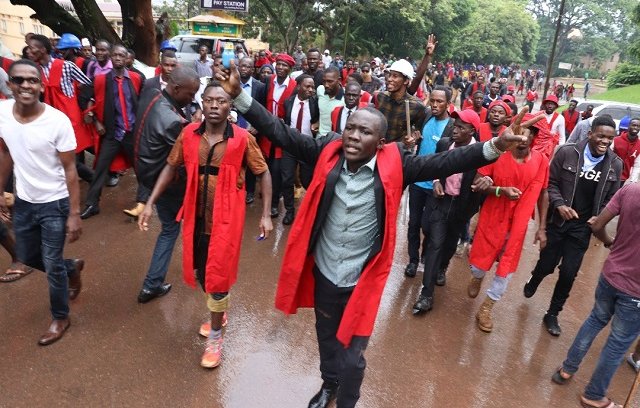
At Uganda’s leading universities, the sight of armed police storming student gatherings has become disturbingly familiar. What once were centers of political activism and free expression are now marked by fear, as security forces increasingly respond to student grievances with bullets, tear gas, and mass arrests.
In April at Kyambogo University, a meeting called to address frustrations over fees and missing results ended in chaos when police raided the student center, firing live ammunition and tear gas into lecture halls. Twenty students, including former student council president Akiso Benjamin, were arrested and charged with incitement and unlawful assembly. For many, this incident highlights a broader pattern: safety concerns are being used to justify silencing student voices.
Authorities argue that heavy-handed responses are necessary to maintain order, while university administrators say protests endanger the wider student community. Yet human rights advocates insist such measures violate constitutional freedoms, transforming campuses into militarized zones. Similar crackdowns have been documented at Makerere University and during demonstrations against controversial projects such as the East African Crude Oil Pipeline, reinforcing fears that dissent of any kind is increasingly intolerable.
Student leaders and legal experts point out that this shift is not accidental. Governments recognize the influence of student movements, which historically shaped political change in East Africa. From Uganda’s own President Museveni to generations of activists, universities once served as hotbeds of revolutionary thought. Today, however, restrictions on campaigns, online-only elections, and the presence of armed officers reflect a deliberate effort to curb that legacy.
While administrators stress the importance of security, critics argue the solution lies in dialogue, not force. Legal experts warn that the growing militarization of higher education risks eroding democratic values, leaving students too intimidated to speak out. For Akiso, who was suspended, expelled, and is now challenging his case in court, the struggle is far from over.
His words capture the defiance of many students facing repression: “No matter the situation, I am determined to continue expressing my right to peacefully assemble when universities set unfair policies and ignore our issues.”
Takeaway:
The escalating use of armed force against student protests in Uganda raises urgent questions about freedom of expression, the role of universities in society, and the future of civic engagement. For meaningful progress, authorities and institutions must replace fear with dialogue before campuses lose their voice entirely.