

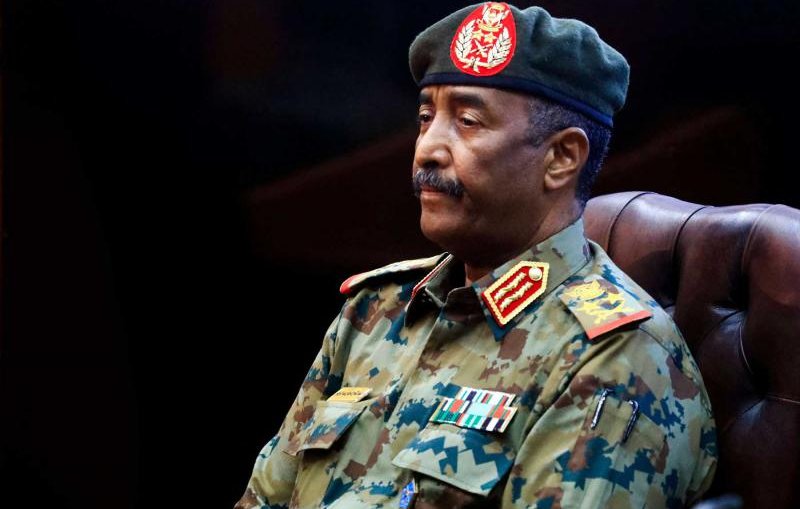
Sudan’s army chief, General Abdel Fattah al-Burhan, has initiated a sweeping military overhaul aimed at consolidating his authority over the country’s armed forces amid escalating conflict with the paramilitary Rapid Support Forces (RSF). In a decree issued on August 18, Burhan brought a wide array of allied armed groups—including former Darfur rebels, tribal militias, Islamist brigades, and civilian defense volunteers—under formal army command. The move marks a significant shift in Sudan’s military structure, signaling Burhan’s intent to centralize power and neutralize potential threats from within the fragmented security landscape.
As part of the reorganization, Burhan appointed a new inspector general and air force chief, while retaining General Mohamed Othman al-Hussein as Chairman of the Joint Chiefs of Staff. These leadership changes follow the retirement of several senior officers and are widely interpreted as a strategic effort to reinforce Burhan’s control over central and eastern Sudan, even as violent clashes continue to rage in the western regions. Political figures have cautiously welcomed the restructuring, suggesting it could prevent the rise of rival military factions like the RSF, which itself originated from government-backed militias and has since evolved into a formidable force.
The timing of the shake-up is particularly significant, coming as Sudan faces deepening political fragmentation. The RSF has established a parallel government, fueling fears of a de facto split in the country as both factions vie for legitimacy and territorial control. In a bid to address the crisis, Burhan recently met with a U.S. Africa advisor in Switzerland to discuss Sudan’s stalled transition to civilian governance. However, with entrenched divisions and ongoing violence, the path forward remains uncertain, and the reorganization may prove to be only the beginning of a broader power struggle that threatens to reshape Sudan’s future.