

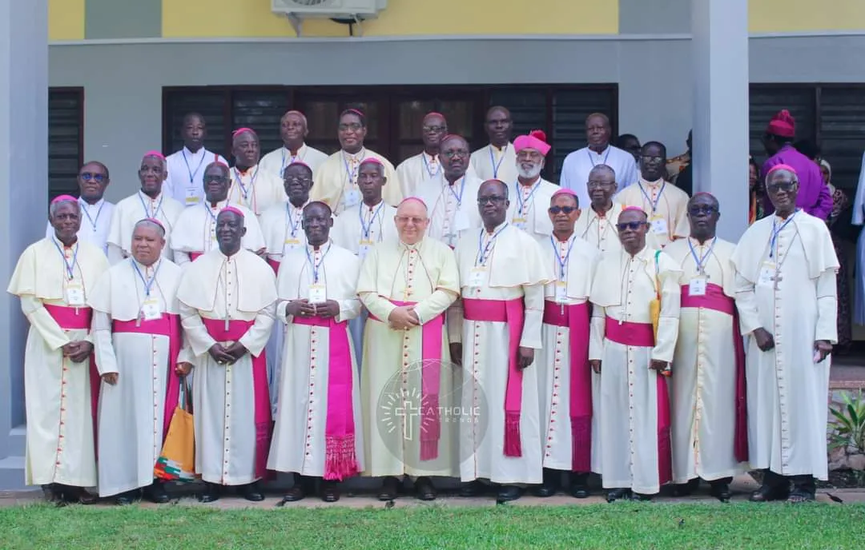
Ghana’s National Catholic Laity Council has thrown its full support behind the Ghana Catholic Bishops’ Conference in a powerful call for decisive action against illegal mining, locally known as galamsey. The Council described galamsey as a “cancer” eating away at the moral, environmental, and social fabric of the nation, echoing the Bishops’ urgent plea for the government to declare a state of emergency in mining zones. This declaration, they argue, would allow for extraordinary interventions such as curfews, land restoration efforts, and the dismantling of entrenched criminal syndicates that profit from environmental destruction.
The Laity Council emphasized that the crisis goes beyond environmental degradation, it represents a profound moral and spiritual collapse. Rivers are poisoned, farmlands destroyed, and children are abandoning school to join mining operations, lured by quick profits and desperation. The Council condemned the complicity of individuals who protect or participate in galamsey, including Catholics who remain silent or offer political cover for these activities. They labeled such involvement as a grave sin, “a sin that cries out to heaven for justice,” urging repentance and accountability from all corners of society.
In response to the Bishops’ call, the Laity Council pledged to intensify its efforts in education, advocacy, and environmental stewardship across parishes and dioceses nationwide. Their commitment includes mobilizing communities to resist illegal mining, promoting sustainable livelihoods, and fostering a renewed sense of civic and spiritual responsibility. This alignment between religious leadership and lay organizations signals a growing movement within Ghana’s faith community to confront one of the country’s most pressing challenges, not just with words, but with action rooted in conscience and compassion.
As the effects of galamsey continue to ripple through Ghana’s ecosystems and communities, the unified stance of the Catholic Church offers a moral compass and a rallying cry. It calls on citizens, leaders, and institutions to rise above apathy and corruption, and to protect the land not only for present generations but for those yet to come. In a nation where faith plays a central role in public life, this bold intervention may prove to be a turning point in the fight against illegal mining.