

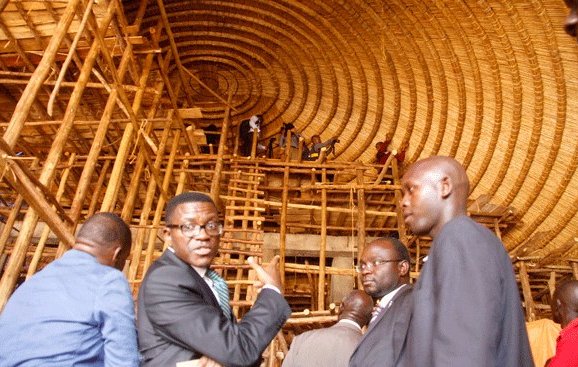
As the restoration of the Kasubi Tombs approaches completion, Kampala Central parliamentary aspirant Abraham Luzzi has commended the leadership of the Katikkiro of Buganda, Charles Peter Mayiga, for guiding one of Uganda’s most significant cultural recovery efforts to near fruition. The milestone marks a major step in safeguarding a site of immense historical, spiritual, and national importance, more than a decade after a devastating fire destroyed much of the structure in 2010.
The Kasubi Tombs, the burial grounds of Buganda’s kings and a designated UNESCO World Heritage Site, hold deep cultural significance not only for the Baganda but for Uganda as a whole. Their reconstruction has been a complex and delicate process, requiring strict adherence to traditional architectural methods, cultural rituals, and conservation standards. Luzzi noted that steering such a project demanded patience, cultural sensitivity, and long-term vision qualities he attributed to Mayiga’s stewardship throughout the restoration journey.
According to Luzzi, the restoration effort represents more than the rebuilding of a physical structure; it symbolizes cultural resilience, continuity, and identity. He observed that the prolonged process tested the resolve of the Buganda Kingdom, yet the near completion of the works demonstrates a firm commitment to preserving heritage for future generations. The project has also revived traditional craftsmanship, providing opportunities for artisans skilled in indigenous building techniques to contribute meaningfully to the restoration.
Luzzi further emphasized that the Kasubi Tombs are a unifying national symbol whose preservation transcends politics and regional boundaries. He argued that cultural heritage sites play a critical role in fostering national pride, historical awareness, and tourism development, and therefore deserve sustained protection and investment. In this context, he called for stronger collaboration between cultural institutions and the state to ensure the long-term maintenance and protection of such sites.
Using the occasion to broaden the conversation, Luzzi also advocated for increased recognition of traditional institutions in Uganda’s governance and development framework. He highlighted language inclusion particularly the wider use of Luganda in public institutions as an important step toward enhancing citizen engagement, cultural respect, and social cohesion in a multilingual society.
In his closing remarks, Luzzi reaffirmed his commitment to promoting cultural preservation, inclusive leadership, and policies that strengthen Uganda’s social fabric. As the Kasubi Tombs prepare to reopen, their restoration stands as a powerful reminder of the importance of heritage, leadership, and collective responsibility in preserving the nation’s history. The project not only restores a physical landmark but also renews a shared sense of identity and continuity for generations to come.