

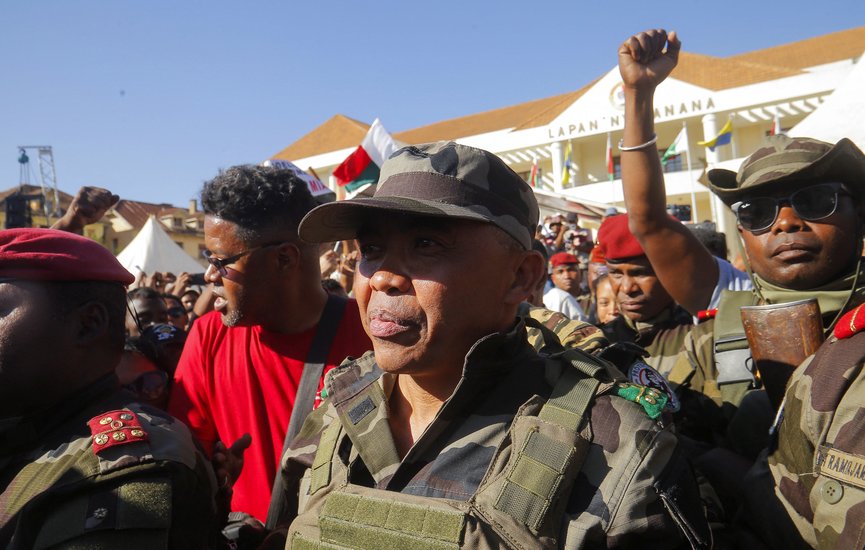
Colonel Michael Randrianirina, the military figure at the center of Madagascar’s recent political upheaval, has signaled a willingness to engage in dialogue with the African Union following the country’s suspension from the continental body. Speaking at a press conference in Antananarivo, Randrianirina acknowledged the AU’s decision as anticipated and expressed openness to “behind-the-scenes negotiations” aimed at restoring diplomatic ties and navigating the country’s uncertain political future. His remarks mark the first indication of a potential thaw in relations between Madagascar’s new leadership and the international community since the coup.
The suspension came in response to the ousting of President Andry Rajoelina, who fled the country amid escalating youth-led protests and growing dissent within the security forces. Lawmakers moved to impeach Rajoelina, but he has rejected the legitimacy of the military takeover, declaring it unconstitutional and insisting that his removal is “null and void.” Randrianirina, commander of the influential CAPSAT military unit, has since announced plans to be sworn in as president by the High Constitutional Court, a move that further consolidates the military’s grip on state institutions and deepens the political crisis.
International reactions have been swift and unequivocal. The African Union condemned the coup and suspended Madagascar’s membership with immediate effect, citing a breach of democratic norms and constitutional order. United Nations Secretary-General António Guterres joined the chorus of concern, urging Malagasy stakeholders to pursue inclusive dialogue and address the underlying causes of instability. The global community continues to monitor the situation closely, calling for restraint and a peaceful resolution that respects the will of the people and the rule of law.
As Madagascar stands at a crossroads, the prospect of dialogue offers a glimmer of hope amid uncertainty. Whether Randrianirina’s overture will lead to meaningful negotiations or simply serve as a strategic gesture remains to be seen. For now, the country’s future hinges on its ability to reconcile internal divisions and reestablish trust with regional and international partners.