

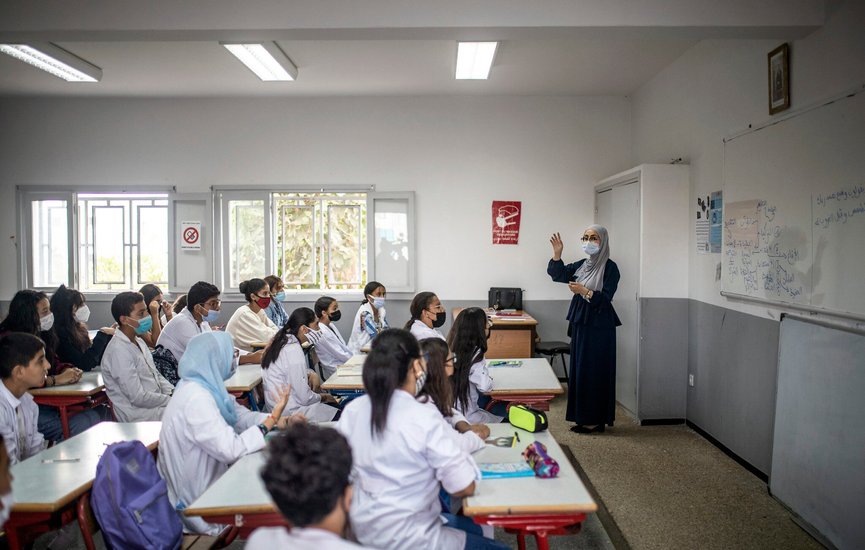
Rabat – Morocco officially began the 2025/2026 school year today, with around 8.27 million students returning to classrooms nationwide.
Over 7 million of these students are enrolled in public schools, supported by more than 299,000 teachers across 12,441 institutions, including nearly 7,000 schools in rural areas.
This year marks the continuation of efforts to expand schools and enhance educational programs, aiming to improve both access and quality for all students.
New enrollments in public primary education reached approximately 730,000, a 7.4% increase compared to last year. Additionally, 169 new schools have opened, including 72 in rural areas and six community schools.
In rural regions, 2,461 new classrooms and 15 new boarding facilities have been added. Significant attention has been given to early childhood education, with more than 2,500 new classrooms now serving nearly 985,375 children, of whom 663,000 are enrolled in public programs, representing 67% of preschool-aged children. Over 2,500 educators received foundational training, and nearly 13,800 participated in ongoing professional development.
The “Leading Schools” initiative continues to drive education reform in Morocco. The program now includes 4,626 primary schools, an increase of 2,000 from last year, serving nearly two million students, supported by 75,000 teachers, including 32,000 additional staff. Middle schools under this initiative have grown to 786, an increase of 554, accommodating 677,586 students with 23,716 teachers.
Schools involved in the initiative have been equipped with necessary resources to ensure optimal learning conditions and improve teaching effectiveness. Language education has also expanded, with more primary schools offering Amazigh and English now taught at all middle school levels.
To combat school dropout rates, 60 new “Second Chance” centers have opened, enrolling 35,000 students in total.
Governance improvements have included a restructured ministry, performance contracts focused on education reform, and the nationwide implementation of the “Integrated School Project” to improve school management and learning outcomes.
Minister Mohamed Saad Berrada visited several schools to assess the new measures. At Mahmoud Darwish Primary School in Sidi Hajjaj Oued Hassar, he observed students in classrooms, reviewed available resources, and attended extracurricular activities designed to support both academic and personal growth.
At Ibn Sina Middle School, he evaluated the “Leading Schools” program, toured classrooms and facilities, and met with staff to discuss strategies for improving teaching quality.
The Minister’s final visit was to Taha Hussein Secondary School, where he reviewed academic offerings and facilities, emphasizing the importance of creating an environment that ensures equal learning opportunities for all students.
Minister Berrada described his visits as a way to verify that the preparations for the school year met the necessary standards. He also highlighted the creation of a central committee to monitor enrollment, address challenges, and maintain communication with parents, ensuring students started the year in the best possible conditions.