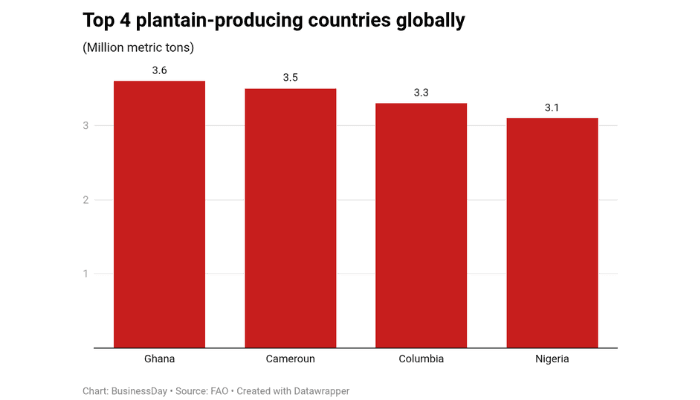
Nigeria’s plantain business has rapidly grown into a multi-billion naira industry that is transforming the agricultural landscape and creating new economic opportunities. As one of the top global producers, Nigeria churns out over three million metric tons of fresh plantains annually, fueling a thriving market that stretches from rural farms to urban consumers.
The rising popularity of plantain-based products, especially snacks like plantain chips, has significantly boosted demand. For farmers, this means lucrative returns; many report earning upwards of ₦600,000 per acre within just months of planting. The crop’s short growth cycle and high yield make it an attractive choice for agripreneurs looking to capitalize on the growing appetite for plantain across Nigeria and beyond.
Entrepreneurs in the sector are innovating by adopting modern farming techniques and exploring new value-added products to tap into both local and international markets. This wave of innovation is helping to strengthen Nigeria’s food security while fueling income growth for communities engaged in plantain cultivation and processing.
However, the industry still faces hurdles such as supply chain inefficiencies and a shortage of processing infrastructure, which limit its full potential. Yet these challenges also open doors for strategic investments in logistics, technology, and processing facilities areas that promise to elevate the plantain business to new heights.
Looking ahead, Nigeria’s plantain sector stands at a pivotal point. With increased investment, improved farming practices, and stronger market linkages, the industry is poised to become a key pillar of the country’s agribusiness economy, driving job creation and contributing significantly to national growth.