

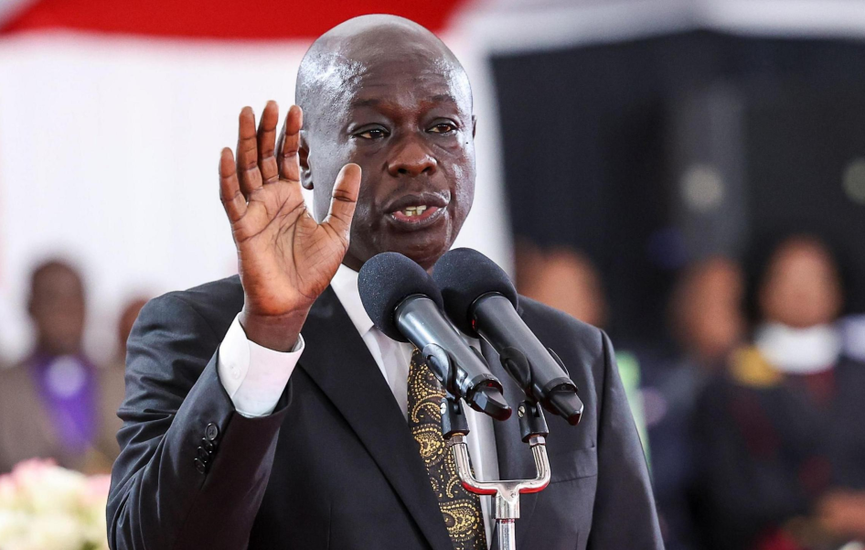
Kenya’s former Deputy President Rigathi Gachagua has returned to the political spotlight under tense and chaotic circumstances, following his dramatic arrival in Nairobi on August 21, 2025. Once a close ally of President William Ruto, Gachagua’s fall from grace culminated in his impeachment last year, and he has since emerged as one of the president’s most vocal critics. His return from a six-week political tour in the United States was expected to be a triumphant moment, but instead it was marred by violent clashes, teargas, and accusations of government-sponsored disruption. Supporters who had gathered at Jomo Kenyatta International Airport to welcome him were met with heavy police presence and hostile confrontations, turning the event into a chaotic melee that left several people injured.
Gachagua’s convoy, which was meant to proceed to Kamukunji grounds for a major rally, was forced to abandon its plans after alleged goons attacked along Mombasa Road. The former deputy president later explained that he ended the procession early to protect his supporters and property from further violence. His allies claimed the government had deployed forces to arrest him upon arrival, though officials denied these allegations. Interior Minister Kipchumba Murkomen had previously warned that Gachagua’s return posed a “security threat,” fueling speculation and tension around the event. Chants of “Wantam,” a slogan coined by Gachagua meaning “one term” in reference to President Ruto, echoed through the streets as his motorcade attempted to navigate the unrest.
Despite launching the Democracy for the Citizens Party (DCP) earlier this year, Gachagua has struggled to convert his popularity into political traction. Promised mass rallies and legislative resignations have failed to materialize, and his party now faces a critical test in 24 upcoming by-elections. Analysts suggest that Gachagua’s early missteps reflect the harsh realities of opposition politics in Kenya, where parties without parliamentary representation face funding challenges, regional loyalties can become national liabilities, and state machinery may be used to frustrate dissent. His efforts to secure international funding during his U.S. tour have also raised questions, as such financing must navigate strict global regulations on political donations.
Gachagua’s political ambitions remain bold, with a clear intent to challenge President Ruto in the 2027 elections. However, recent events have exposed the fragility of his movement and the formidable obstacles ahead. His return, intended to galvanize support and signal strength, instead revealed the volatility of Kenya’s political landscape and the difficulty of building a viable opposition force. Whether he can recover from these setbacks and mount a serious challenge remains uncertain, but his presence has undeniably stirred the political waters and reignited debate about leadership, loyalty, and the future of Kenyan democracy.