

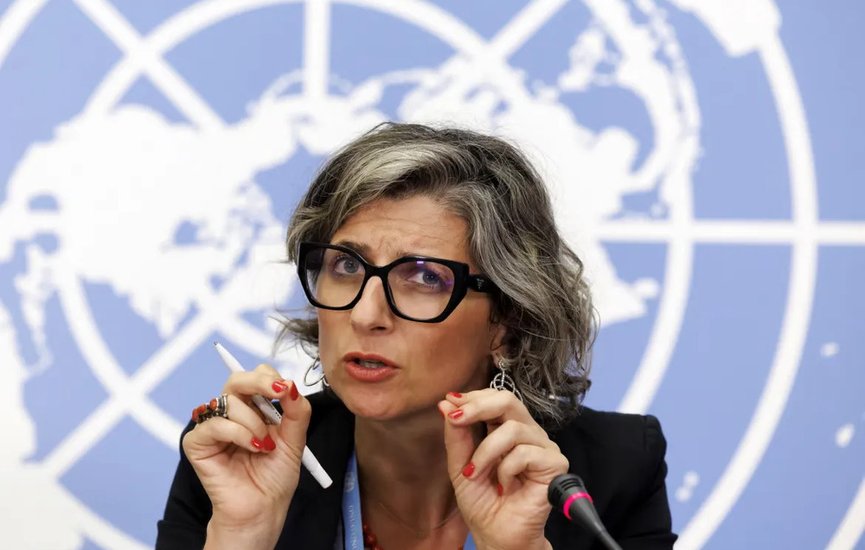
South Africa has formally withdrawn an unauthorized legal summons issued to Francesca Albanese, the United Nations Special Rapporteur on the situation of human rights in the Palestinian territories, following a diplomatic misstep that drew international attention. The incident occurred during Albanese’s visit to South Africa, where a sheriff attempted to serve her court papers initiated by Christian Friends of Israeli Communities and Christians for Israel USA. The summons, however, bypassed the necessary legal channels and lacked approval from the Department of Justice and Constitutional Development, rendering it invalid under South African law.
Justice Minister Mmamoloko Kubayi responded swiftly and decisively, issuing a public apology to the United Nations and clarifying that the summons had not been sanctioned by her department. She emphasized that any civil process involving foreign entities must be routed through the director general and receive ministerial authorization, as stipulated by Section 40(2) of South Africa’s legal framework. The failure to follow these procedures not only violated domestic legal standards but also risked undermining South Africa’s diplomatic credibility and its obligations under international law.
The government’s retraction of the summons and its apology to the UN reflect a broader commitment to maintaining diplomatic integrity and respecting the protocols that govern international relations. Albanese’s visit was part of her mandate to assess human rights conditions in the occupied Palestinian territories, a role that South Africa has historically supported through its vocal advocacy for Palestinian rights. The incident, while regrettable, has prompted internal reviews within the justice system to prevent similar breaches in the future and to reinforce the importance of procedural rigor in matters involving foreign dignitaries.
This episode also underscores the delicate balance South Africa must maintain in its foreign policy, especially in relation to the Israeli-Palestinian conflict. The country’s stance has often aligned with global calls for justice and human rights, and its engagement with UN representatives like Albanese is part of that broader diplomatic narrative. By swiftly correcting the error and reaffirming its commitment to international norms, South Africa has taken a necessary step to preserve its reputation as a principled and responsible actor on the world stage.