

Uganda’s persistent youth unemployment and skills mismatch have prompted experts to call for a stronger role for volunteerism as a bridge between education and the world of work. With more than 70 percent of the population under 30 and many graduates struggling to secure employment, structured volunteering offers an experiential learning pathway that can help young people build practical skills, gain workplace exposure, and improve their employability.
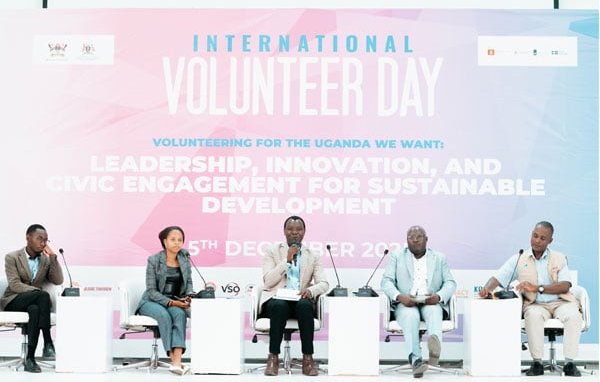
At an International Volunteer Day event, sociologists and development practitioners highlighted that academic qualifications alone are no longer sufficient for the demands of today’s labour market. Employers increasingly seek competence in teamwork, communication, adaptability, and ethical leadership skills that classroom learning often struggles to cultivate. Volunteer engagement, they argue, can provide real-world experiences where youth learn by doing, contributing meaningfully to community service while developing capabilities that matter in the job market.
Yet, stakeholders acknowledge that volunteerism in Uganda remains largely informal, under-recognised, and constrained by structural gaps. Experts point to the absence of a standardised volunteer management framework with clear placements, defined roles, mentorship and supervision, competency assessments, documented service records, and post-placement support that would allow volunteers to build credible skill portfolios recognised by employers. Many graduates currently exit volunteer roles without certification or verifiable references that attest to their experience and capabilities.
Institutional culture also contributes to the challenge. Volunteer engagement is still widely treated as charitable activity rather than a strategic human resource investment. As a result, volunteers are often confined to basic administrative tasks that offer limited growth or learning opportunities, reinforcing perceptions of volunteer labour as low-cost help rather than a stepping stone to professional development. Moreover, financial and resource constraints including lack of stipends, transport support, or communication allowances make it difficult for young people from low-income backgrounds to sustain volunteer placements.
Development officials emphasise that volunteer engagement should be grounded in Uganda’s socio-economic realities. While volunteering can build social capital, trust, cooperation, and community resilience, it must also accommodate survival needs and expectations of young people ensuring that volunteer experiences are meaningful, aligned with career goals, and do not inadvertently displace paid labour or reinforce unequal power dynamics.
In response to these challenges, the Youth After School Initiative (YASI), with support from partners including Restless Development, has launched a roadmap and policy brief for a structured, inclusive, and sustainable national volunteerism framework. The proposed model aims to integrate volunteerism into education, employment, and youth development systems, strengthen coordination among government, the private sector, academia, and civil society, and promote recognition, protection, and visibility of volunteer contributions.
Proponents argue that when properly institutionalised, volunteerism can evolve from sporadic or charitable activity into a strategic mechanism for skills development, leadership cultivation, and enhanced employability. With collective ownership, adequate funding, and sustained visibility, Uganda can leverage volunteer engagement as part of the solution to youth unemployment offering young people opportunities to contribute meaningfully while preparing for the world of work.