

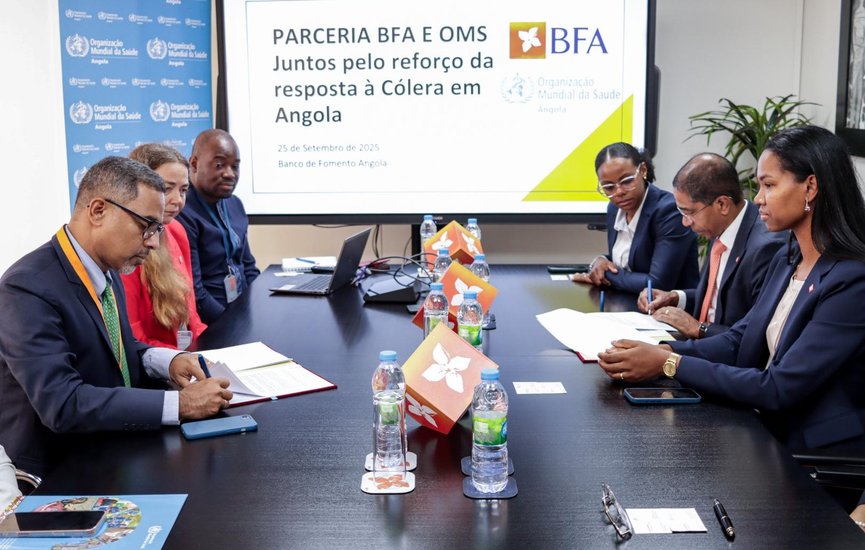
In a decisive response to Angola’s most severe cholera outbreak in two decades, Banco de Fomento Angola (BFA) and the World Health Organization (WHO) have forged a strategic partnership aimed at strengthening the country’s public health defenses. The agreement, signed in Luanda on September 25, 2025, marks a significant moment of collaboration between the private sector and international health authorities. BFA’s contribution of 30 million kwanzas will be used to procure vital medical supplies, including rehydration solutions, specialized beds, sprayers, tents, and safety boxes. These resources, delivered with WHO’s technical support, will be handed over to Angola’s Ministry of Health to reinforce treatment centers and equip healthcare workers operating in the hardest-hit regions.
Since the beginning of 2025, Angola has recorded approximately 29,000 cholera cases and more than 800 deaths across 18 of its 21 provinces. With a fatality rate of 2.8 percent, well above the WHO’s emergency threshold, the outbreak has exposed critical vulnerabilities in the country’s health infrastructure. Delayed access to care, inadequate epidemiological surveillance, and poor sanitation have compounded the crisis, making containment efforts more challenging. Despite the government’s deployment of mass vaccination campaigns, which have reached nearly three million people, and the establishment of treatment centers and oral rehydration points, the risk of transmission remains high, especially with the onset of the rainy season threatening to accelerate the spread.
The partnership between BFA and WHO goes beyond emergency relief; it represents a broader commitment to building long-term resilience within Angola’s health system. It underscores the essential role of private sector engagement in public health and highlights the importance of sustained investment in infrastructure and capacity-building. Key priorities include expanding access to primary and emergency care, improving water, sanitation, and hygiene services, enhancing technical training for health professionals, and strengthening surveillance and risk communication mechanisms. These efforts aim to transform Angola’s health landscape, ensuring that the country is better equipped to respond to future outbreaks and safeguard the well-being of its population.