

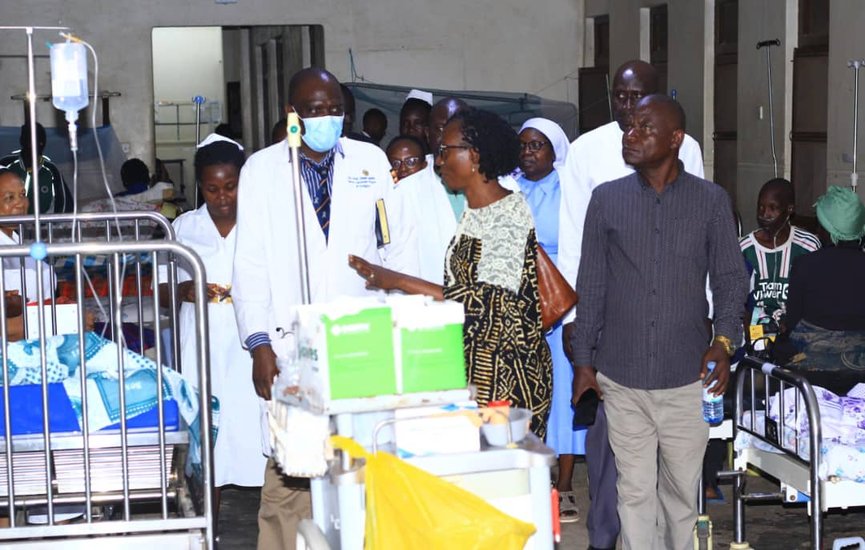
The State House Health Monitoring Unit (SHHMU) has rolled out a hands-on supervision exercise at Soroti Regional Referral Hospital in response to rising public complaints regarding healthcare services. The initiative, led by Deputy Director Dr. Julian Nabatanzi, aims to identify gaps in service delivery, propose practical solutions, and ensure accountability among hospital management and staff. The exercise began with an entry meeting on Tuesday that brought together key local leaders, including Soroti Resident City Commissioner Okurut John Michael, Resident District Commissioner Hajji Muluga Imran, the Deputy Town Clerk, the Mayor of Soroti West Division, senior health officials, and security heads.
Dr. Nabatanzi emphasized that the purpose of the supervision is not to assign blame but to strengthen governance, enhance operational efficiency, and improve patient care. During the exercise, the team held detailed discussions with hospital management and departmental heads, conducted a thorough tour of the facility, and began drafting an aide-mémoire. This document captures service gaps, outlines proposed interventions, identifies necessary resources, assigns responsibility to officers, and sets clear timelines for action. Once implemented, it will serve as a monitoring and accountability tool to ensure that identified issues are addressed and that improvements are sustainable over the long term.
Hospital staff and stakeholders expressed optimism about the initiative, noting that regular oversight from SHHMU can foster transparency, improve responsiveness to patient needs, and enhance the overall quality of healthcare services. The exercise reflects a broader government commitment to addressing systemic challenges in Uganda’s health sector by promoting collaborative problem-solving and practical solutions, setting a precedent for similar interventions at other regional hospitals across the country.
This hands-on approach by SHHMU underscores the importance of proactive governance in public health, ensuring that complaints from patients and the community translate into actionable reforms. By combining supervision with direct engagement, resource assessment, and follow-up mechanisms, the initiative seeks to build a culture of accountability, improve service delivery, and ultimately strengthen public trust in Uganda’s healthcare system.