

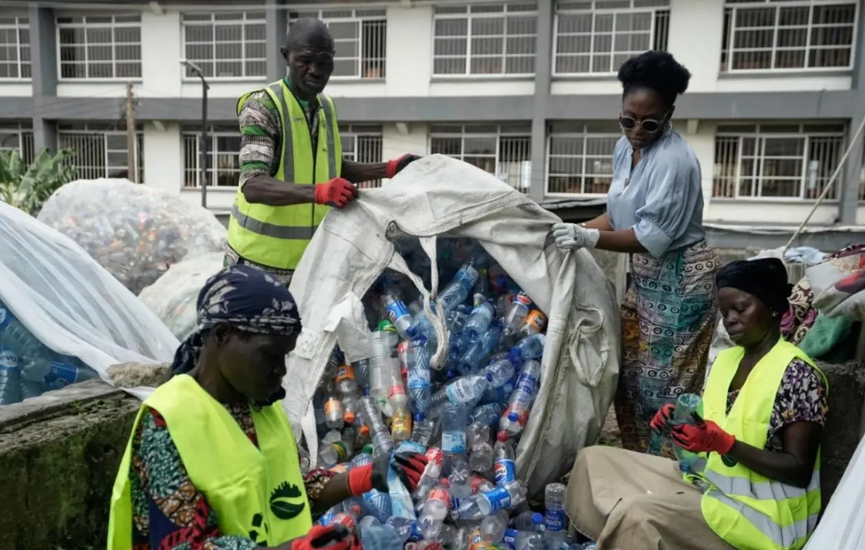
On a towering rubbish dump in Lagos, a young man painstakingly sifts through heaps of waste, searching for recyclable plastics, a task as daunting as it is necessary. His efforts reflect a broader struggle in Nigeria’s largest city, where millions arrive in pursuit of a better life, only to confront the harsh realities of pollution and inadequate waste management. Amid this challenge, a growing number of private waste managers and sustainability groups have emerged, offering grassroots solutions to a crisis that threatens both public health and the environment.
In 2024 alone, Lagos contributed 870,000 tons to the world’s staggering 57 million tons of plastic waste. Some residents now earn a living by scraping labels off bottles and separating caps from containers, underscoring the informal economy that has sprung up around recycling. Yet, despite these efforts, systemic change remains elusive. Last month, Lagos state authorities introduced a ban on single-use plastics like styrofoam packs, cutlery, plates, and straws, effective from July 1. Offenders risk having their businesses shut down, but enforcement has been weak, and alternatives are scarce. Styrofoam products still line store shelves, and other forms of plastic, though less prevalent, continue to circulate.
Omoh Alokwe, co-founder of Street Waste Company, believes that real progress hinges on changing public attitudes and behaviors. “Lagos actually generates over 2,500 tons of plastic waste daily,” she explains. “To eradicate it, we need behavioral change, starting with post-consumers and how well they sort their waste.” Her call for awareness is timely, as Nigeria joins global negotiations in Geneva aimed at crafting a treaty to end plastic pollution. These talks, however, remain fraught with tension, particularly from oil-producing nations resistant to curbing plastic production, which is largely derived from fossil fuels.
The consequences of inaction are visible across Lagos, where each resident generates an average of 34 kilograms of waste annually. In the absence of a robust waste management system, much of it ends up in waterways, clogging canals, polluting beaches, and exacerbating floods. The Lagos state government declined to comment on the situation, but voices like Alokwe’s continue to push for reform. She warns that many people remain unaware of the long-term damage plastics cause. “Single-use plastics are used for an average of 12 minutes before being discarded. Multiply that by our population, and the scale of pollution becomes unimaginable.”
Alokwe argues that responsibility must also lie with manufacturers, who should prioritize the recyclability of their products. Holding up two PET bottles, she illustrates the difference: one clear and easily recyclable, the other opaque and far more difficult to process. “Organizations and producers need to consider recyclability from the start,” she insists. “That’s how we begin to fix the global plastic pollution crisis.” Her message is clear: solving Lagos’s plastic problem will require coordinated action from consumers, corporations, and governments alike, driven by awareness, accountability, and a shared commitment to sustainability.