

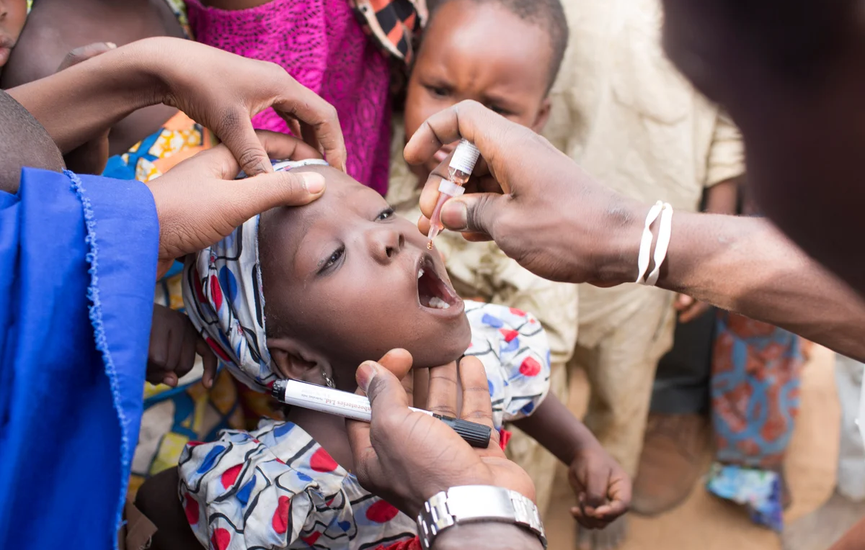
In the Kado Lifecamp neighborhood on the outskirts of Nigeria’s capital, 29-year-old Eucharia Joseph carries a cooler box filled with oral polio vaccines packed in ice. Her daily journey takes her through dusty streets, passing tin-roofed homes, mosques, and churches. By the end of the day, she and her team of six women will have vaccinated hundreds of children, all with the goal of ensuring that no child remains unprotected from the disease that once paralyzed thousands across the country.
In 2020, Nigeria was declared free of wild poliovirus by the World Health Organization (WHO), a major milestone for a country that once led global transmission. However, a related strain, circulating vaccine-derived poliovirus (cVDPV), still poses a threat in under-immunized communities. This strain emerges when the weakened virus from oral vaccines mutates and spreads through contaminated food or water, particularly in areas with low vaccination rates.
Despite progress, Nigeria continues to face sporadic outbreaks of cVDPV, with 10 cases reported in March 2023 and 98 cases in 2022. In northern Nigeria, ongoing insecurity and cultural resistance further complicate efforts to eradicate polio. Women like Eucharia Joseph, who have access to households due to cultural and safety factors, are leading the fight against polio. These women are essential in reaching children, as they can gain trust in conservative and conflict-affected regions where male health workers may be restricted.
In regions like Borno State, which has faced long-standing conflict, female vaccinators play a critical role, often risking their lives to reach children. Health workers, such as Aishatu, face challenges from misinformation and mistrust, particularly regarding the vaccine's effects. Despite these hurdles, they persist, using strategies like one-on-one conversations and community outreach to counter myths and encourage vaccination.
While female vaccinators continue to make progress in eradicating polio, the job is not well-paid, with many supplementing their income through small businesses. This dual role has led to economic empowerment, with some vaccinators using their community trust to start businesses and become informal leaders. Experts like UNICEF’s Cristian Munduate highlight how these women have become agents of change, contributing to both public health and local economic development.
Despite successes, Nigeria’s fight against polio remains ongoing. Health workers emphasize the need for sustained efforts to prevent further outbreaks and strengthen routine immunization systems, ensuring the virus is fully eradicated.