

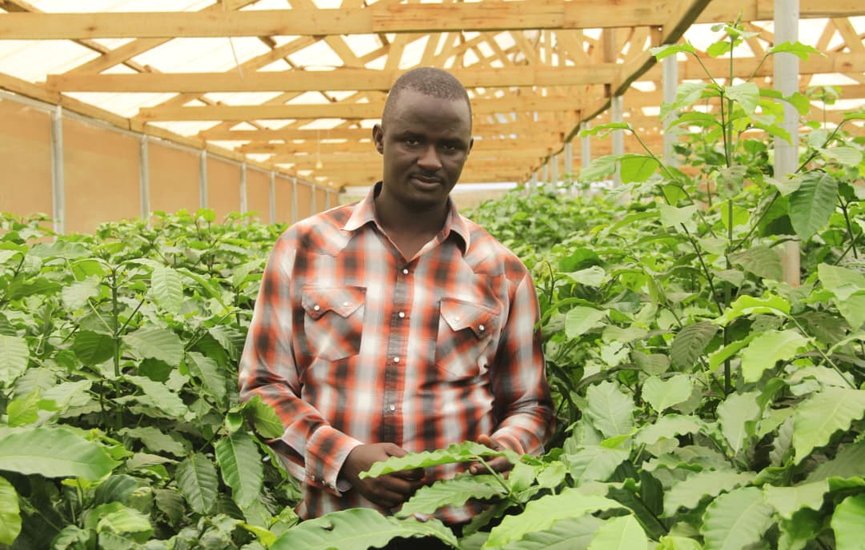
In a bid to safeguard Uganda's vital coffee industry from the looming threat of climate change, scientists are exploring drought-resistant coffee varieties as part of a European Union-funded initiative. The Green Coffee Initiative, which is part of the larger Robusta Project, focuses on identifying and cultivating coffee plants that can endure prolonged dry spells and rising temperatures.
Led by PhD student Ali Milton, researchers are conducting experiments to test how different coffee varieties respond to stress in both controlled greenhouse environments and farmers' fields. The goal is to pinpoint coffee strains that can thrive in the face of water scarcity, which is becoming a significant challenge for Uganda’s coffee farmers.
“We're studying how different varieties manage without water. Some consume water quickly, while others have adapted to conserve it. The varieties that survive these stresses are naturally resistant and adjust the way they breathe and photosynthesize,” Milton explained.
As part of the research, the team is sourcing wild coffee materials from Uganda's forests, such as Budongo and Semuliki, where Robusta coffee grows naturally in high temperatures. These wild varieties will be evaluated for their resilience to drought, pests, and diseases, with hopes of breeding future coffee varieties that can thrive in Uganda’s changing climate.
Additionally, the project promotes agroforestry, which involves integrating shade trees into coffee plantations. This approach not only helps stabilize temperatures but also reduces the risk of flower abortion and improves both yield and quality. By encouraging farmers to plant shade trees, the project aims to create more sustainable coffee farming systems that can withstand harsh weather conditions.
“These drought-resistant coffee varieties, which we call the 'next generation coffee,' are crucial for farming in hot and dry areas like Karamoja, where droughts are common. These plants have the genes and resilience needed for such challenging climates, meaning farmers won't be limited to rain-rich regions,” said Milton.
The project's long-term goal is to expand coffee production into hotter, drier regions, ultimately enhancing Uganda’s resilience to climate change. This would not only bolster the country's coffee industry but also secure the livelihoods of millions of farmers who rely on coffee as their main source of income.
With the global coffee market under increasing pressure from climate change, Uganda’s forward-thinking approach to sustainable coffee cultivation could serve as a model for other coffee-producing nations. The success of this project could protect one of Uganda’s most important exports and ensure its future competitiveness on the global stage.
For more information on the project or to support sustainable coffee farming in Uganda, visit the National Coffee Research Institute (NaCORI) website or reach out to local agricultural groups involved in the Green Coffee Initiative.